Excavation Permits and OSHA Regulations: What You Need to Know
Most excavations over 5 feet deep require OSHA-compliant protection systems. Permits vary by municipality. This guide covers what approvals you need before digging starts.
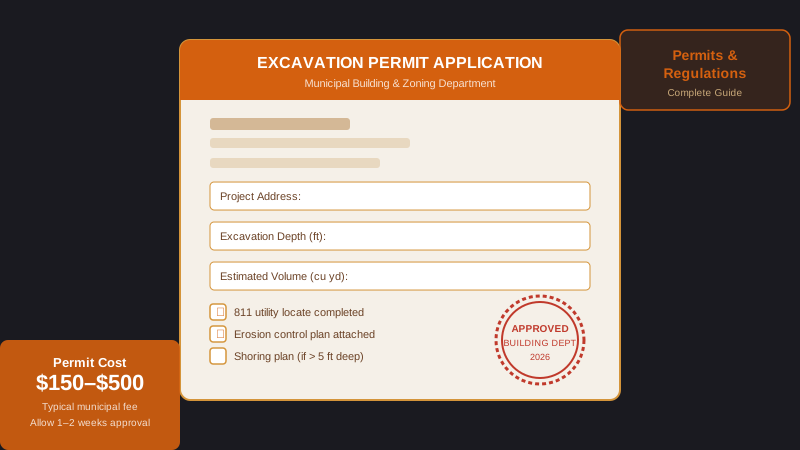
Excavation without proper permits or safety measures is one of the fastest ways to turn a construction project into a legal and financial nightmare. OSHA regulations for trenching and excavation are among the most enforced in the construction industry, for good reason. Trench collapses kill dozens of workers every year in the US. This guide covers what permits you need, which OSHA rules apply, and what your contractor should be doing to comply.
Do You Need a Permit?
Permit requirements vary dramatically by jurisdiction, but the following typically trigger a permit:
The building permit for your structure (foundation, pool, addition) typically covers the excavation associated with that structure. Where it gets complicated is standalone grading work or site preparation not directly tied to a permitted structure.
How to Check Permit Requirements
Call your local building department or planning department before starting any project. In most counties, you can also check online. The two key questions: "Do I need a grading permit?" and "Does my excavation need a separate permit, or is it covered under the building permit?"
Unpermitted work can result in stop-work orders, fines ($500–$5,000 per violation in many jurisdictions), and requirements to restore the site to original condition, at your expense.
OSHA Trenching and Excavation Safety (29 CFR 1926 Subpart P)
OSHA's excavation standard applies to any excavation on a job site, regardless of size. Here are the key requirements contractors and DIYers need to know:
The 5-foot rule
Any excavation deeper than 5 feet in soil (not rock) that will have workers entering it must have a protective system in place. The three approved methods:
Soil type determines the required slope angle. OSHA classifies soils into Type A (most stable, like hard clay), Type B (medium, like silt or soft clay), and Type C (least stable, like granular sand or disturbed soil). A competent person on-site must classify the soil before work begins.
The 20-foot rule
For excavations deeper than 20 feet, a registered professional engineer must design the protective system. You can't just slope it steeper or add another shoring layer, it needs an engineered design.
Competent person requirement
OSHA requires a "competent person" to be present and responsible for the excavation at all times. A competent person is someone trained and authorized to identify hazards and take corrective action. This is the contractor's responsibility on professional jobs; on DIY work over 5 feet deep, it's your responsibility, and few homeowners have this training.
Daily inspections
The competent person must inspect the excavation before each shift, after a rainstorm, after a freeze-thaw event, and any time conditions change. Any cracks, bulging, or water in the excavation walls are stop-work conditions.
Utility Marking Requirements
Before any excavation begins in the US, you're legally required to call 811 (the national "Call Before You Dig" number) or go to call811.com at least 72 hours before digging. This triggers a utility locating service that marks the approximate location of underground utilities within your project footprint.
What 811 locates: Most public utilities (gas, electric, water, sewer, telecommunications) that run in public easements.
What 811 doesn't locate: Private utilities, irrigation systems, outdoor lighting wiring, buried propane tanks, private water wells, and utility laterals on private property (e.g., the pipe from the street to your house meter, which is privately owned). Private utility locating services ($300–$600) use ground-penetrating radar or electromagnetic detection to find these.
OSHA also requires that utility locations be marked on your site before excavation, and that workers maintain safe clearances from marked utilities.
How Permit and Safety Compliance Affects Cost
Permits add direct cost: typically $150–$500 for a grading permit, $500–$2,500 for a building permit that includes excavation. But the larger compliance cost shows up in the method of excavation.
If a 10-foot-deep foundation requires sloped walls (per OSHA Type B soil requirements at 1:1), the actual excavation footprint is much larger than the foundation itself. A 40×30 ft foundation at 10 ft deep with 1:1 sloping requires excavating 60×50 ft at the top, nearly double the footprint. That significantly increases the cubic yardage (and therefore cost) versus a vertical-wall excavation with proper shoring.
When you're using the excavation cost calculator, use the actual planned excavation dimensions (including any required setback for sloping) rather than just the foundation dimensions. Your contractor should give you this number; it's part of their excavation plan.
What to Verify in Your Contractor's Quote
Before signing an excavation contract, confirm:
Reputable contractors handle all of this as standard practice. If a contractor is evasive about compliance or suggests that "permits aren't usually required for projects like this," take that as a warning sign.
Special Situations
Excavation near existing structures
Within 8–10 feet of an existing foundation or structure, excavation can undermine the adjacent footing, causing settlement or collapse. A licensed structural or geotechnical engineer should review any excavation that close to an existing building.
Wetlands and environmental permits
Any excavation near wetlands, streams, or water bodies may require permits under Section 404 of the Clean Water Act (federal) and state-level wetlands regulations. These permits can take months to obtain. Check with your local Army Corps of Engineers office or state environmental agency early.
Blasting permits
Controlled blasting requires a licensed blasting contractor and typically a county or municipality blasting permit. Notification to neighbors within a defined radius is usually required, and vibration monitoring may be mandated.
Permits and compliance spending almost never show up cleanly on a contractor's initial quote, but they are real, non-optional line items on any project that touches the ground. Build the dig cost first with our calculator, then pad another 3–8% for permits, 811 follow-up, and any dewatering or erosion-control measures your jurisdiction enforces. That small reserve keeps a slow week at the building department from derailing the whole timeline.
Related Articles
How Much Does Excavation Cost in 2026?
Excavation costs range from $1,500 to $15,000+ for residential projects. This breakdown explains what drives the price and how to budget accurately.
Read articleconstructionFoundation Excavation Cost: Budget Guide for 2026
Foundation excavation costs $3,500–$12,000 for most homes. This guide breaks down what drives the price for basements, crawl spaces, and slab foundations.
Read articleconstructionDIY vs. Professional Excavation: When Each Makes Sense
DIY excavation with a rented mini-excavator costs $350–$600 per day. Professional contractors charge $10–$50+ per cubic yard. Here is how to decide which is right for your project.
Read article