Excavation Cost Per Cubic Yard: What Contractors Charge
Excavation costs $10–$50+ per cubic yard depending on soil type, project complexity, and hauling. Here is what contractors actually charge and why.
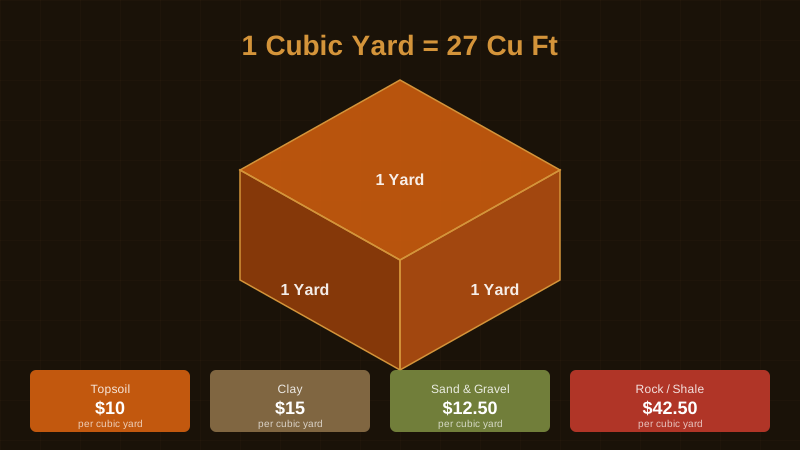
Excavation cost per cubic yard ranges from $10 for loose topsoil to $50 or more for solid rock. That number is the key figure when comparing contractor bids; it levels the playing field regardless of how differently contractors scope a project. Here's what goes into the per-yard rate and how to use it to evaluate quotes intelligently.
Why Cost Per Cubic Yard Is the Right Number to Compare
When three contractors bid the same job, their total prices often differ by 20–40%. Some of that is margin. Some is different equipment assumptions. But a lot comes down to how many cubic yards each contractor estimates, and those estimates can legitimately differ by 10–15% based on how precisely they measure.
Comparing the per-cubic-yard rate cuts through all of that. If Contractor A bids $22/cu yd and Contractor B bids $34/cu yd for the same soil type, you now have a specific question to ask Contractor B: what accounts for the premium?
Use the excavation cost calculator on this site to estimate your project volume in cubic yards, then divide each contractor's total by that number to normalize their bids.
Current Rates by Soil Type (RSMeans 2026)
These are the base excavation rates without hauling, sourced from RSMeans 2026 construction cost data:
These are equipment-and-operator rates for a standard backhoe or excavator. Labor-only rates (hand-digging or confined spaces) run 4–6× higher.
What's Included in a Per-Yard Rate
A typical contractor per-yard rate includes:
It does NOT typically include:
When you're comparing quotes, make sure you're looking at what each contractor has included or excluded from their per-yard number.
Project Type Adds a Multiplier
Beyond soil type, project complexity adjusts the effective rate. Contractors don't always break this out as a separate line, they often just build it into their per-yard figure. Here's how typical adjustments look:
A contractor pricing foundation excavation through clay at $15/cu yd base rate and 1.15× multiplier is effectively charging $17.25/cu yd all-in for the excavation portion, before hauling.
A Real Example: Breaking Down a Quote
Here's how to decode a contractor bid. Suppose you get a quote for a 40×30 ft, 4 ft deep foundation excavation in clay soil:
Volume: (40 × 30 × 4) ÷ 27 = 177.8 cubic yards
Contractor quote: $5,800 total (includes hauling)
To find effective per-yard rate:
For clay with foundation complexity, $20.62/cu yd is reasonable. If another contractor quotes $28/cu yd on the same volume, you know to ask what's different.
You can run this math yourself using the excavation cost calculator, enter your dimensions and compare the "cost per cubic yard" result against contractor bids.
Regional Variation in Per-Yard Rates
National averages shift significantly by region. Based on 2026 contractor survey data:
Labor costs, permitting requirements, and equipment availability all drive regional variation. A $15/cu yd rate in Ohio might translate to $20/cu yd in New Jersey for an identical project.
How to Use Per-Yard Rates to Spot Problems
A per-yard rate significantly below the range for your soil type usually means one of these things:
A rate significantly above range doesn't always mean overpriced. Sometimes it reflects:
The per-yard rate is a starting point for the conversation, not the final word. But knowing what's normal for your soil type puts you in a much stronger position to ask the right questions.
Reducing Your Per-Yard Cost
A few choices directly lower the per-yard rate:
See our excavation cost-saving guide for a full list of ways to reduce your total project cost without compromising quality.
Related Articles
How Much Does Excavation Cost in 2026?
Excavation costs range from $1,500 to $15,000+ for residential projects. This breakdown explains what drives the price and how to budget accurately.
Read articleconstructionHow to Calculate Excavation Volume in Cubic Yards
To calculate excavation volume: multiply length × width × depth in feet, then divide by 27 to convert to cubic yards. Full guide with examples and common mistakes.
Read articleconstruction4 Soil Types That Affect Excavation Cost (And How Much Each Adds)
Soil type is the single biggest variable in excavation pricing. Topsoil runs $8–$12 per cubic yard while rock hits $35–$75. Here is what each soil type means for your project cost.
Read article